Administrative Bureau

The organizational structure of the Kingsport Police Department is divided into the Operations Bureau and the Administrative Bureau. The Administrative Bureau consists of support oriented units such as Professional Standards, Central Dispatch, Records, Evidence, and the City Jail.

Captain Justin Quillin

Captain Quillin joined the Kingsport Police Department in 1995 and has served in a variety of capacities including Patrol Officer, Field Training Officer, and Community Police.  He has supervised in the Training Unit, the Patrol Division, the Administrative Bureau, the Jail, Power Shift, the Strategic Operations Unit, the Professional Standards Unit, and the Operations Bureau.  He has served in several specialized roles including SWAT, Honor Guard, and Department Chaplain.  Captain Quillin is a graduate of the FBI National Academy Session 252, Quantico, VA, and received his Bachelor of Science in Religion from Liberty University.  He was promoted to Captain in January of 2023 and currently oversees the Administration Bureau.

Professional Standards Unit

The Kingsport Police Department’s Professional Standards Unit was officially formed in 2014 with the goal of unifying several pre-existing divisions of the department under one central umbrella for the purpose of maintaining nationally recognized standards of excellence in law enforcement. The divisions of the department that make up the Professional Standards Unit include the Training Division, the Internal Affairs Division, the Accreditation Manager, and the Public Information Officer.

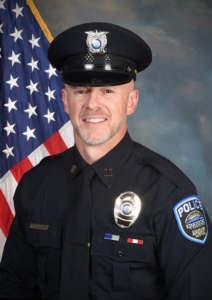
Lieutenant Tom Wayt received his Bachelor of Science in Criminal Justice and Masters of Business Administration from Bethel University. He is also a graduate of the School of Police Staff and Command (SPSC) at Northwestern University. He began his public safety career in 1988 with the Wintersville, Ohio Fire Department where he served as a Firefighter and Paramedic. He later served as an E.R. Technician for the University of Pittsburgh Medical Center/Mercy Hospital and as a Paramedic Rescue Technician for Baldwin E.M.S. in Pittsburgh, Pennsylvania. He was sworn in at the Kingsport Police Department in 2003 and has since served as Patrol Officer, Community Police, S.W.A.T. Operator, Crime Analyst, and supervisor in both the Training Unit and on Patrol. A highly proactive officer, he has been awarded the Life Saving Medal and the Medal of Valor and is a past recipient of both the Mark Vance Domestic Violence Officer of the Year and the Mothers Against Drunk Driving (M.A.D.D.) Officer of the Year awards. He was promoted to Lieutenant in April of 2016, and after serving a tour as Watch Commander on Patrol, several divisions of the Administrative Bureau including the Records Division, Municipal Court, the Quartermaster/Evidence Unit, and 5th Platoon. He currently oversees the Professional Standards Unit.

The Kingsport Police Department is currently one of over 900 law enforcement agencies accredited by the Commission on Accreditation for Law Enforcement Agencies (CALEA). Agencies that become accredited by CALEA have demonstrated a consistent commitment to continual improvement, which strengthens overall performance and elevates our professionalism.
CALEA was developed in 1979 by the International Association of Chiefs of Police, the Police Executive Research Forum, the National Organization of Black Law Enforcement Executives, and the National Sheriffs’ Association. This conglomeration developed a credentialing program that includes a set of professional standards, a process for assessing participating agencies against those standards, and a system for recognizing participating agencies based on their level of compliance. CALEA is the only internationally recognized public safety accrediting body.
Beginning in 1992, the Kingsport Police Department earned accreditation from CALEA, becoming one of Tennessee’s first agencies to do so. Since that initial award, we have maintained our accredited status with CALEA by earning eight (8) additional reaccreditation awards, the most recent of which came in March 2025. K.P.D. currently holds CALEA’s Advanced Meritorious Gold Standard with Excellence Accreditation.  As such, the Kingsport Police Department proudly serves our community and acts as a benchmark for other agencies across the nation.

Accreditation: What it means

The accreditation process involves a comprehensive agency self-assessment of the 439 standards. The standards address nine major law enforcement subjects:
(1) Role, responsibilities, and relationships with other agencies;
(2) organization, management, and administration;
(3) personnel structure;
(4) personnel process;
(5) law enforcement operations;
(6) operational support;
(7) traffic law enforcement;
(8) prisoner and court-related services; and
(9) auxiliary and technical services.
Accreditation provides the police service with a proven management system comprising written directives, sound training, clearly defined lines of authority, and routine reports that support decision-making and resource allocation.
This program provides objective evidence of our commitment to excellence in leadership, resource management, and service delivery. Accreditation embodies the precepts of community-oriented policing. It creates a forum in which police and citizens work together to prevent and address challenges confronting law enforcement, and provides clear direction on community expectations.
Accreditation is a coveted award that symbolizes professionalism, excellence, and competence. It requires written directives and training to inform employees about policies and practices; facilities and equipment to ensure employees’ safety; and processes to safeguard employees’ rights. Employees take pride in their police service, knowing it represents the very best in law enforcement.

Obtaining Accreditation

James F. Keesling was named Chief of the Kingsport (TN) Police Department (KPD) in 1986 after retiring from the Tennessee Bureau of Investigation as Assistant Director. He obtained his BS in Criminal Justice Administration from East Tennessee State University. Chief Keesling is a graduate of the 96th Session of the FBI National Academy and was a member of the CALEA Task Force that developed the 4th Edition Standards Manual. Keesling retired from the Kingsport PD in August 1999.

In 1986, James F. Keesling was the newly appointed Chief of the Kingsport Police Department and was faced with several tough issues that had to be addressed immediately:
  • The community wanted improved police service.
  • The Police Department was without a policy and procedures manual.
  • The Part I Crime Clearance rate was 19%.
  • Computer technology for managing crime issues was nonexistent.
  • New construction of a Justice Center was in the architectural stage.
  • The agency was starting CALEA accreditation.
As the department began its accreditation efforts, high-liability areas such as use of force, pursuit, etc., were easily addressed through the guidance provided by accreditation standards. However, as areas related to crime-fighting came to our attention, there was some uncertainty. Developing policy and procedures for areas such as crime reporting, case management, information analysis, and organizational management was a concern, since any manual reporting system would soon be transitioned to computerized reporting. However, as the Kingsport Police Department progressed, the accreditation process became somewhat of a roadmap for our needs in computer technology.
After reviewing the CALEA Standards Manual, it became clear that a high-quality computer system would be required for us to become one of the best police departments. The integration of accreditation standards with technology works like this: standard 42.1.3 requires a written directive establishing a case file management system for criminal investigation functions that includes case status, administrative designation, guides on records to be maintained, access to files, and purging procedures. As one develops those written procedures, the focus shifts to carrying them out in the simplest and most efficient manner. Obviously, computer technology provides case information and efficiency.
The written directive essentially establishes specifications for software that will perform those functions. Technology integration is but one example of the benefits of the accreditation process.
As is the case with most standards, meeting a standard promotes research, broad thinking, and attention to detail. Consequently, great ideas are born to achieve the standard’s objective. The accreditation process gives a department the opportunity to share new ideas and traditional methods with other departments. This also allowed our department to obtain new ideas about technological advancements and how they could be utilized to meet CALEA standards. Therefore, our department stays on the cutting edge of good customer service for the citizenry it serves.
Accreditation has greatly assisted the Kingsport Police Department in accomplishing its goal of becoming one of the best police departments by assisting us in all areas, not just technology. The Kingsport Police Department has completed many of our objectives in a timely and efficient manner, thanks to the guidelines set by CALEA.
The self-assessment phase of accreditation identified many areas where the Kingsport Police Department needed to improve, particularly in our policy and procedures manual. To be blunt, in 1986, the Kingsport Police Department did not have a policy manual. CALEA standards set out a “road map” showing the way we needed to go to improve our police services for the City of Kingsport. This may not sound like a technological advancement, but it moved us into the modern era of law enforcement. Our new General Orders and Standard Operating Procedures Manuals have greatly improved our operations. This improvement can best be seen in our crime clearance rate. In 1987, we had a Part I Crime clearance rate of 19%. In 1998, our clearance rate had improved to 56%.
All of the improvements that the Kingsport Police Department has made in the accreditation process have been with one singular goal in mind – to improve our service to the Citizens of Kingsport, Tennessee. This has been accomplished in a resounding manner. Many of our recruiting and selection methods and our training procedures have been based on CALEA standards. These standards have led our department to hire highly capable and educated personnel.
Our department aggressively seeks ways to prevent crime and takes pride in accomplishing its job in a professional yet courteous manner. This was reflected at our last public hearing for our reaccreditation assessment. So many citizens came to the hearing that the time limit expired before everyone could be heard by the assessors.
The CALEA process works for the police department, the municipal government, and most important of all, for the citizens of Kingsport, Tennessee.

The Training/Personnel Unit assists the administration in the selection process for police officer at least once each year. This process consists of administering a written examination, conducting a physical agility test for the candidates who pass the written examination, and scheduling an oral interview for the applicants who successfully pass the physical agility test.

Once hired, the Training Unit supervises the recruit throughout his/her academy and field training. This unit is also responsible for the certification and continuing education of senior personnel, developing lesson plans/curriculum for training courses, and maintaining specialized certifications, e.g. Bomb and Arson Technicians. State law requires annual training for police officers, jailers, dispatchers, and record clerks.

Procedures for making complaints

If you have a complaint regarding the actions or lack of action by a member of the Police Department, you may register your complaint by doing the following:

  • Contact the on-duty Watch Commander or Supervisor.
  • Contact the Division/Bureau Commander of the Police Department.
  • Contact the Chief of Police

We would prefer that you begin with the Watch Commander or Supervisor; however, if they are unavailable or you feel the matter is of great importance, please feel free to contact the Division/Bureau Commander, or even the Chief of Police. Your complaint will be forwarded to the proper person for inquiry/investigation.

We prefer that your complaint be made in person, but we will accept complaints by letter or telephone.

Procedures for Investigating Complaints

Upon receiving a complaint against a member of the Police Department, the Internal Affairs Commander or the Chief of Police will initiate either a formal or informal investigation into the matter in question.

An investigator will be assigned to the case and will interview victims, witnesses, and the accused, as well as collecting any pertinent evidence. A report will then be made to the Internal Affairs Commander or the Chief of Police.

The Chief of Police or his designee will review the information and determine if there is cause to believe laws or department policy and ruler were violated.

If the investigation becomes lengthy, you will be kept informed on its status. Upon conclusion, you will be notified of the results and any action taken.

Where to make you complaint

The Police Department is located in downtown Kingsport in the Justice Center at 200 Shelby Street Kingsport, TN 37660.

You may telephone us at the following numbers:

Watch Commander/Supervisor

423-229-9436 or 423-246-9111

Division/Bureau Commander

423-229-9300

Chief of Police

423-229-9423

Kingsport Central Dispatch

Each year, the Communications Specialists in Kingsport Central Dispatch process roughly a quarter of a million telephone calls. Approximately twenty percent (50,000) of these calls are emergency calls to 9-1-1. Although a division of the Kingsport Police Department, Kingsport Central Dispatch also provides services for the Kingsport Fire Department, Sullivan County E.M.S., Kingsport Life Saving Crew, and other city departments and functions. For additional information on the Kingsport Emergency Communications District, please visit http://kingsport911.org.

Kingsport Central Dispatch moved into the new 7,500 square foot, state-of-the-art, 9-1-1 Emergency Communications Center in Downtown Kingsport in October 2015. Central Dispatch had previously been housed in a cramped 1,000 square foot space on the second floor of the Kingsport Justice Center since 1989. Prior to that, Central Dispatch operated out of the basement of the Civic Auditorium. Central Dispatch personnel include the 9-1-1 Director, a Communications Supervisor, a Technical Services Coordinator, 4 Shift Leaders, and more than a dozen Communications Specialists.

On the Alert 911 Registration

Kingsport Emergency Communication District, Sullivan County 911 and City of Kingsport Public Works department utilize GeoCast Web as their emergency notification system. In addition to residential and business records in the existing database, this system offers citizens the option of self-registration for non-land line phone users.

Geo-Cast assist emergency communication workers with notification to citizen concerning events such as the need for evacuation due to a hazard material spill or release and information or description of a lost or missing child in their neighborhood.

Public works uses Geo-Cast to notify customers of changes in their services such as scheduled water outages or upcoming line repairs in the area.

Please click here or on the icon below to enter the Self Registration Portal.

User’s Guide to 911 Emergencies

THE KINGSPORT POLICE DEPARTMENT OFFERS 9-1-1 EDUCATIONAL TIPS

The Kingsport Police Department would like to share the following educational information regarding the proper use of 9-1-1. This information has been provided by Kingsport Central Dispatch. We also invite you to visit their website at the following link: www.Kingsport911.org

WHAT IS 9-1-1?

9-1-1 is the number utilized in North America to report an emergency. Although it is in wide use, it is not universal. Rural areas may still utilize seven digit numbers for the police department, fire department, and ambulance services.

WHEN SHOULD YOU USE 9-1-1?

Nine-one-one (9-1-1) is only to be used in emergency situations. An emergency is any situation that requires immediate assistance from the police/sheriff, the fire department, or an ambulance. If you are ever in doubt of whether a situation is an emergency, you should call 9-1-1. It is better to be safe and let the 9-1-1 call taker determine if you need emergency assistance.

WHEN NOT TO CALL 9-1-1
  • For information
  • For directory assistance
  • For paying traffic tickets
  • For your lost pet
  • As a prank

User’s Guide to 911

Dial 9-1-1
  • Tell the dispatcher what the emergency is
  • Wait for further instructions from the dispatcher
  • Don’t hang up until the dispatcher tells you to
What is an Emergency?
  • Any serious medical problem (chest pain, seizure, bleeding)
  • Any type of fire (business, car, building)
  • Any life-threatening situations (fights, people with weapons, etc.)
What information will the dispatcher need?
  • The location where assistance is needed
  • Your name and phone number
  • The nature of the emergency
  • Descriptions of suspects, or additional information
  • Where? – Where is this occurring?
  • What? – What is happening?
  • When? – Is this happening now?
  • Who? – Who is the victim, suspect, etc.?
  • Why? – Do you know why this is happening? i.e. depression?
  • Weapons? – Are there any weapons involved?
Helpful Hints
  • Always listen to the Dispatcher.
  • The questions they ask are for the safety of you, the public and the officers.
  • Just because they are questioning you, does not mean help is not on the way.
  • Information is entered into a computer & dispatched to the proper units.
  • Remain on the line until told to hang up. The operator may need more information or to give you further instructions.
  • Be familiar with your area. We can’t help if you don’t know where you are.
  • NEVER intervene in a crime in progress.
What to do when you need help, but it’s not an emergency.
(Please contact the appropriate office.)
  • City Hall – 229-9400
  • Police Information – 229-9300
  • Fire Prevention/Inspection – 229-9440
  • Sullivan County EMS – 279-2812 (Convalescent Transport), 323-6474 (Billing)
  • Water/Sewer Department – 229-9454 (Maintenance), 229-9416 (Billing)
  • Public Works – 229-9470
  • Public Transportation-KATS – 224-2613
  • Central Dispatch – 246-9111

Cellular Devices

Wireless 9-1-1 is used to describe 9-1-1 calls, which originate from cellular telephones and other personal communications devices. During peak traffic times such as morning or evening commute, wireless calls often make up nearly half of all calls received.

Things to remember when you call 9-1-1 from a wireless device:

  • Provide an accurate address
  • Give exact street number and street name if possible
  • If uncertain, give a close intersection description
  • Provide a business name or landmark if address is unknown
  • Stay on the line and follow directions carefully
  • Do not hang up until your call is answered
  • Give your cell phone number to the call taker

As you travel the interstate highway system, notice signs located in the median. These signs have information concerning the interstate number, direction of travel and the milepost. This is valuable information to help identify your location to 9-1-1 call takers.

Special Tips for Seniors

The following is a list of special tips that can help save the lives of our senior citizens
  • Invest in a touch-tone phone with large, easy-to-read numbers.
  • Put a 9-1-1 reminder near the phone. Dialing ‘0’ will not always connect you with a local operator. It may connect you with an operator hundreds of miles away.
  • Always dial 9-1-1 for local police, fire or medical emergencies.
  • Keep your medical history taped to the refrigerator in an envelope clearly marked with your doctor’s phone number(s).

The department has a policy of handling certain property crimes by taking a report over the phone. Our Teleserve unit provides this service, to allow uniformed officers more time for patrol and responding to urgent calls.

When you call the department to report a property crime (at 246-9111), the operator will screen your call to determine if it fits the criteria for a Teleserve report. If it does, you will be asked for enough information to let the Teleserve operator call you back, and take the report.

Text to 911 Guidelines

911 text call picture

Effective immediately, some cellular telephone customers in the Kingsport 911 Emergency Communications District will be able to Text to 911.  It is important to note that for the time being, this capability only exists for Verizon and AT&T Wireless customers; however, other area cell phone carriers are expected to enable this service for their customers in the near future.

While Text to 911 is now a possibility, we would like to strongly emphasize that calling should always be the preferred method for contacting 911.  That’s why we are adopting the slogan, “911: Call if you can. Text if you can’t.

Just as when calling 911, texting 911 should only be done in the event of an actual emergency. Non-emergency calls to Kingsport Central Dispatch still need to be made to 423-246-9111, and that number is not able to receive text messages.

Text to 911 is especially beneficial to those who are hearing- or speech-impaired, but citizens should only text 911 when calling 911 is unsafe or not possible. Examples include when:

  • Callers can’t speak due to a threat, illness, or medical condition.
  • Callers have poor reception and can only send text messages.
  • Phone lines and cell phone towers are overwhelmed, and only texts can get through.

If you send a text message to 911, you should always try to include the following information:

1) Your name

2) Your location (specific address, intersection, or mile-marker)

3) The particular type of emergency you are experiencing (medical, fire, crime in progress, etc.)

4) Your telephone number (just in case the Caller ID feature were to fail to provide it)

Don’t just send your initial text to 911 and then put your phone down and forget it! Texting 911 will be a two-way interactive conversation. You should be prepared to receive and respond to follow-up text messages from a Communications Specialist so that they can obtain any additional necessary information to enable them to provide the appropriate response to your emergency.

Text to 911 may not always work due to a variety of factors beyond our control. If you send a text message to 911 and your carrier has not enabled this service, or if your text is inadvertently received by a neighboring dispatch center that is not set up for this service, you will receive a “bounce-back message” to instruct you to call 911 by voice instead.

Try to have a back-up plan to allow you to call 911 if your message isn’t received. If you send a text to 911 and get no response whatsoever, you should assume that your text did not go through and find a way to make a voice call to 911 immediately.

A few additional extremely important factors include:

  • Emojis, ideograms, smileys, and GIFs should never be used.
  • Text shorthand (TTYL, IIRC, IMHO, etc.) should never be used.
  • Pictures and videos are not compatible with Text to 911 at this time, but they might be added  at a later date.
  • Messages need to be clear, concise, and written in plain and simple, easy to understand  language.

Records Division

The Records Division has converted from a data entry port to a quality control emphasis with respect to police reports. This is due to our new PDAs, which use DataDriven as a field-reporting tool and VisionAir, our new Records Management System.

The Records Division is responsible for manual filing of all case files of officers and for quality control of all TIBRS data into the department’s computer system. This includes all incident reports and arrest reports that will be submitted to the state for reporting.

Traffic citations are tracked for City Court purposes and accountability for MTAS standards. Management of request for public information due to incident and accident reports are also part of the day-to-day activities, as well as city court management.

The Records Division is responsible for the retention of all reports and citations utilized by the Kingsport Police Department. In 2009, the Kingsport Police Department began a process of being a paperless reporting agency through using PDA’s and a new records management system. Thus, Records Division became a quality control process for review of Tennessee Incident Base Reporting System (TIBRS).

The Records Division serves as a customer service point and is open Monday through Friday from 8:00 A.M. to 5:00 P.M except holidays.

The Records Division is also responsible for payments for the Red Light Violations. If you would like to pay online please click here. (The link will redirect you to our City’s Website. Once there please click Pay Online and look for the Red Light Violation option.) If you need to review your video from the Red Light Violation please click here. Please have your citation number and vehicle tag information ready as these are needed to review the footage.

To view recent annual reports, click the year of interest: 2021, 2022 , 2023, 2024

Kingsport City Court

City Court is located at 200 Shelby Street, inside the Justice Center

Kingsport Police Records  (Reports / Citations)

423-229-9427

Traffic Court

423-229-9428

Fax 423-229-9495

Crash Reports Online

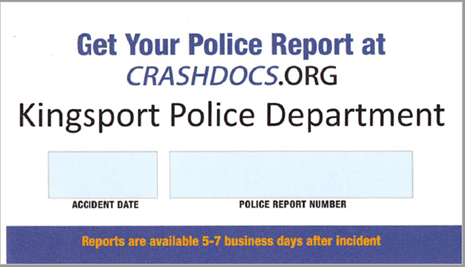
Kingsport Police Department accident reports are now available online. Please click the below picture to be forwarded to the website to obtain a copy of the crash report. Reports are available through this service after March 30, 2020. If you need a crash report prior to this date please contact our Records Division at 423-229-9427.

Quartermaster, Evidence, and Property Unit

The Kingsport Police Department’s Quartermaster is responsible for the issuance of every uniform, vehicle, and piece of equipment in use by the department. He also serves as the building supervisor of the Kingsport Justice Center. The Quartermaster manages the department’s Evidence and Property Unit which handles the disposition of every article of physical evidence and found property that enters into the possession of the Kingsport Police Department.

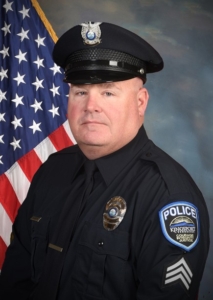
Sergeant Mike Burnette started his Criminal Justice career as a Communications Specialist/911 Dispatcher in the Kingsport Emergency Communications Center in 1996.  He was sworn in as a Kingsport Police Officer in 1999.  He has attended Walters State Community College and the University of Tennessee Knoxville.  During his tenure with the Kingsport Police Department, he has served as a Patrol Officer, Detective, Field Training Officer, K-9 Handler, Community Police Officer, and as a Supervisor on Patrol.  He was promoted to Sergeant in November 2018 and currently serves as Quartermaster and oversees the Evidence and Property Unit.

Kingsport City Jail

The Kingsport City Jail is a state certified holding facility, falling under the rules and regulation of the Tennessee Corrections Institute. The jail is inspected annually by a State of Tennessee Detention Facilities Specialist to ensure that the facility and staff are meeting the requisite criteria. Corrections Officers are responsible for booking, processing, and securing individuals who are arrested by Kingsport Police Officers until they are released or transferred to another facility.

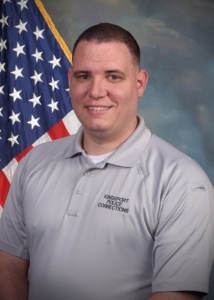
John Fry began his career in corrections at the Kingsport City Jail in 2016. During his time in the Kingsport City Jail, he served as the lead training officer from 2019 to 2025 and was twice awarded Civilian Employee of the Quarter.  In December 2025, he was promoted to the position of Jail Administrator and currently supervises eight Corrections Officers and oversees all Kingsport City Jail operations.